Available worldwide · Designed in Tottori, Japan
花魁OIRANJAPANWhere to buy

OIRAN JAPAN / LIGHTING LAB

See the light.
Know its purpose.

A sweep, a flash, a welcome. Each begins with a different signal. Understand the functions before choosing your installation.

06 functions to understandReal product examplesVehicle details matter

01 / UNDERSTAND THE FUNCTION

Similar words.
Different jobs.

Choose a function, then compare its trigger, wiring and limits. These are documented product examples; the actual truck still needs a fitment check.

Explore a function

Comparing Standard with Sequential

Turn signalling

Standard indicator

One signal, illuminated together.

What triggers it
The vehicle's turn-signal command.
What it does
The indicator illuminates as one flashing signal, rather than a progressive sweep.
What to connect
Check that the exact lamp offers standard operation and follow its mode-selection instructions.

Keep in mindAn available mode does not confirm vehicle fitment or permission for every installation and market.

Documented exampleHOMURA V500

The 24 V V500 offers a choice of standard or sequential turn-signal operation.
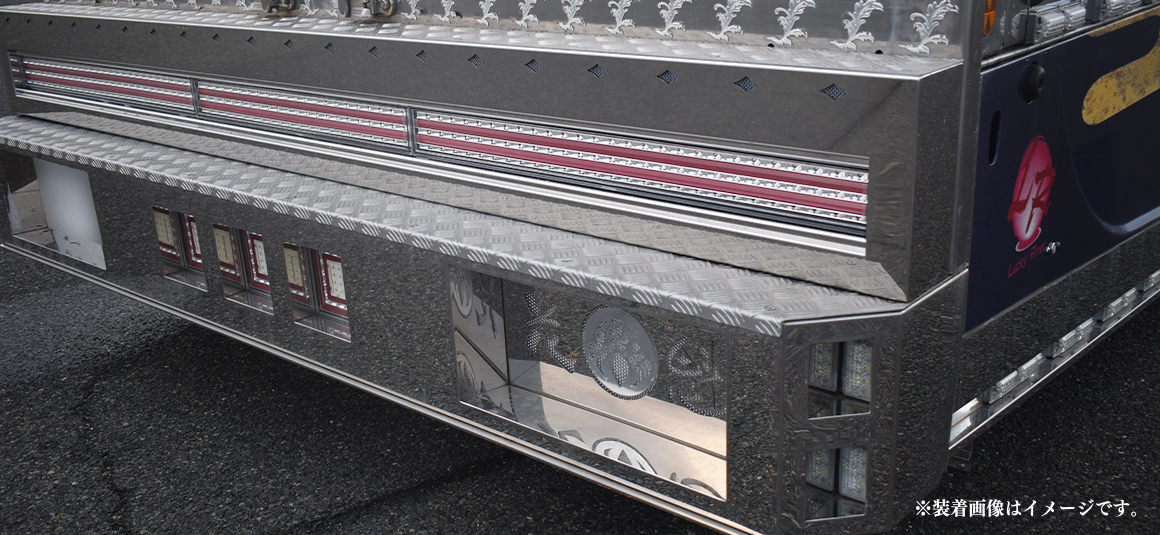
Turn signalling

Sequential indicator

A turn signal that lights in sequence.

What triggers it
The vehicle's turn-signal command.
What it does
The illuminated pattern progresses through the indicator. A still photograph cannot demonstrate its timing.
What to connect
Mode choices depend on the exact reference. Sequential capability does not imply ULA, SEA or ESS support.

Keep in mindTSURUGI's OCTR-CRC-SH1-C short non-indicator model has no turn-signal function.

Documented exampleTSURUGI

OCTR-CRC-LO1 and OCTR-CRC-SH1 use sequential-only turn signals in normal operation. V500 separately offers selectable standard/sequential operation.

02 / SEE THE REAL LAMP

One installation.
Six recorded states.

Explore the manufacturer's TSURUGI photographs: unlit, position, brake, indicators, reverse and all lights. The upper row is TSURUGI; the installation includes other lighting.

Compare lighting functions

Manufacturer photos. TSURUGI is shown in the upper row; other lighting is visible in this installation.

OIRAN TSURUGI — Unlit, manufacturer photograph
Official installation example — Unlit

The manufacturer notes that a horizontal in-line arrangement is not road compliant in Japan.

Manufacturer source

Photographs show a state, not a sequence. They do not show flash cadence, a sequential sweep, ULA, SEA or an ESS event. Use the function descriptions and manufacturer instructions for those distinctions.

03 / KEEP THE DETAILS CLOSE

The function reference.

Open a term for its documented example and installation limits. This reference and the original photograph links remain readable without JavaScript.

01Standard indicator

One signal, illuminated together. The indicator illuminates as one flashing signal, rather than a progressive sweep.

Trigger
The vehicle's turn-signal command.
Installation
Check that the exact lamp offers standard operation and follow its mode-selection instructions.

An available mode does not confirm vehicle fitment or permission for every installation and market.

HOMURA V500

The 24 V V500 offers a choice of standard or sequential turn-signal operation.

02Sequential indicator

A turn signal that lights in sequence. The illuminated pattern progresses through the indicator. A still photograph cannot demonstrate its timing.

Trigger
The vehicle's turn-signal command.
Installation
Mode choices depend on the exact reference. Sequential capability does not imply ULA, SEA or ESS support.

TSURUGI's OCTR-CRC-SH1-C short non-indicator model has no turn-signal function.

TSURUGI

OCTR-CRC-LO1 and OCTR-CRC-SH1 use sequential-only turn signals in normal operation. V500 separately offers selectable standard/sequential operation.

03Unlock & Lock Action

A lighting action linked to locking. Runs the product's unlock/lock lighting sequence; it is a different function from the turn signal.

Trigger
Unlocking or locking, on a compatible installation.
Installation
V500 uses the supplied option harness and the corresponding vehicle signals. Confirm the wiring with the installer.

V500 allows ULA or SEA: only one action mode can be selected at a time. This example does not establish the wiring of another family.

HOMURA V500

ULA is one of the V500's two selectable optional actions. Its five finish photographs do not demonstrate the action.

04Starting & Ending Action

A lighting action linked to ignition. Runs a starting or ending lighting sequence. SEA is not a side-marker function.

Trigger
Switching the ignition on or off, with the specified connection.
Installation
On V500, use the supplied option harness and select SEA or ULA, one action mode at a time.

OIRAN states that SEA must not be used on public roads in Japan. Follow the product instructions and the rules for the intended country.

HOMURA V500

V500 documents starting/ending motion as an optional action, separate from ordinary tail, brake and turn functions.

05Emergency Stop Signal

Check the vehicle and the lamp together. For indicator-equipped TSURUGI, the included ESS connector changes the indicator to standard flashing during hazard/ESS operation.

Trigger
Emergency braking signalling on a compatible vehicle system; the TSURUGI instructions also describe hazard operation.
Installation
Confirm the truck's ESS equipment, the exact lamp reference and the required connections. Unknown equipment stays unconfirmed.

The short non-indicator TSURUGI OCTR-CRC-SH1-C provides no turn signal. An ordinary indicator photograph does not demonstrate emergency braking behaviour.

TSURUGI

Read ESS support alongside the functions of OCTR-CRC-LO1 or OCTR-CRC-SH1 and the manufacturer's dedicated connector instructions.

06Hyperflash & resistors

Investigate a symptom before choosing a part. A suitable resistor or canceller addresses specified LED-conversion circuits. It does not add a lighting mode or diagnose the fault.

Trigger
A vehicle may interpret the lower load of an LED conversion as a failed bulb. Unexpected flashing or a warning needs investigation.
Installation
Match the circuit, voltage, lamp and vehicle-specific instructions. Resistance parts become hot; install them exactly as instructed.

OIRAN note 6 says not to also use the tail lamp's supplied hyperflash resistor when using OER0-04N, OER0-04CT, OER0-46N or OER0-32N. This named rule is not a universal resistor recommendation.

OIRAN resistor range

The range contains different references for different circuits. A lamp swap does not mean every installation needs an additional resistor.

04 / FROM FUNCTION TO FITMENT

Bring the right
details to the installer.

A function name is the start of the conversation. Confirm the lamp, vehicle and wiring together. If a detail is unknown, include that in your request.

Prepare a fitment request Check published fitment
  1. Exact lamp

    Full reference, suffix, selected finish and required functions.

  2. Actual truck

    Make, model, vehicle type, production year/month and any modifications.

  3. Electrical system

    12 V or 24 V, original bulb/LED lighting, connector and ESS equipment.

  4. Complete installation

    Harness, resistor or canceller references, quantities, mounting and source notes.

  5. Intended use

    Country, road-use requirements and the manufacturer's restrictions for the chosen action.